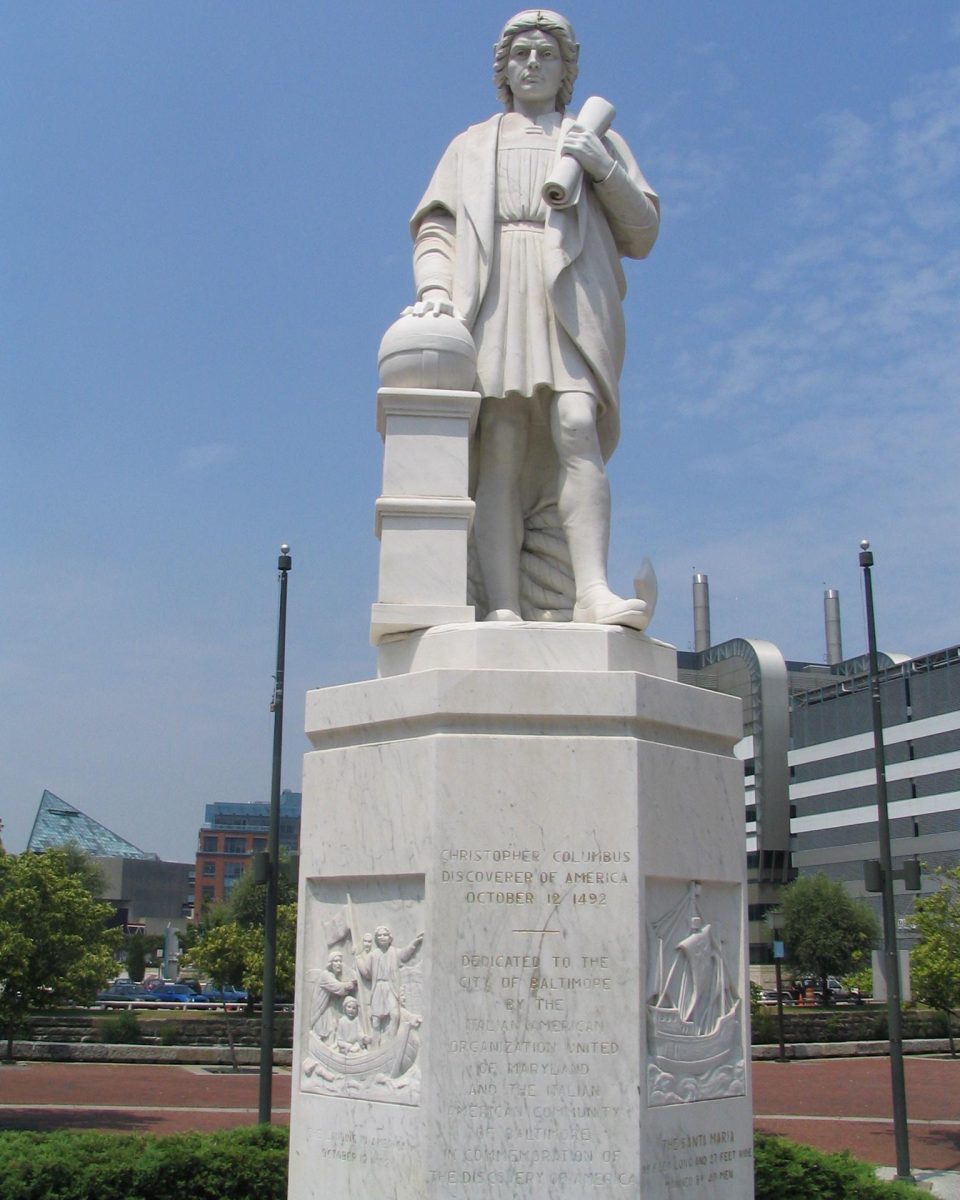
Columbus Day and the discovery of America. Indigenous Peoples’ Day and honoring of culture. One celebrates Columbus’s landing in America after his voyage, while the other acknowledges the hardships that the Native population had to endure during colonization, leaving one question: Is Columbus Day really what it seems to be, or are there atrocities behind it?
Columbus Day, being the official federal holiday recognized by the United States government, is held on the second Monday of October. It celebrates the arrival of Columbus in the Americas on October 12, 1492. Columbus departed on August 3, 1492, from Port Palos de la Frontera in southern Spain.
When Christopher Columbus first arrived in the Americas, he seized the land for Spain, despite it already being inhabited by Native Americans, who got stuck with the name “Indians” as Columbus originally thought he stumbled upon islands near India or Asia.
Although Columbus also sought resources on native land while enslaving the Indigenous people, he is looked at as a hero because he was one of the first to challenge old thinking, becoming a symbol of European exploration and conquest, demonstrating the American spirit of independence.
U.S. history teacher Ms. Sarah DiGiacomo states, “Many people don’t know the atrocities committed by Columbus. When I was growing up, I learned only positive things about him. It wasn’t until college that I learned the truth of his actions.”
Opposed to Columbus Day, also on the first Monday in October, Indigenous Peoples’ Day displays a different perspective on the events that happened on this day in 1492.
Many people are only aware of the fact that Columbus “discovered” America, being uneducated on Columbus’s violence towards Native Americans, such as forced labor and colonization that ruined their homes.
To compare the two narratives of the same day, DiGiacomo comments, “The narrative of Columbus Day celebrates the ingenuity and persistence of one man set on achieving his goals. Indigenous Peoples’ Day recognizes that the nations already established in the Americas, before the arrival of Columbus, were, and continue to be, thriving communities worthy of American pride and respect.”
Columbus Day was created to mark the discovery of the Americas in 1492, emphasizing the expansion and exploration of Europe. In contrast, Indigenous Peoples’ Day focuses more on the historical side of things, acknowledging the culture of Native peoples and showing the world the violence that was caused by colonization. There are many acts of brutality committed on this day in history, but the comparison comes down to perspective.
Mr. Zachary Phelan, a world history teacher at Foran High, says, “As for the perspective on the day, I believe that comes from your own morals, values, understanding of history, and in this case, ancestry. When I taught in Springfield, many of my students were of Puerto Rican descent. Now, I teach in Milford, and I have many students of Italian ancestry. I believe this largely impacts their views on the day.”