Since the freedom of the press, stated in the First Amendment of the Bill of Rights, journalism has evolved from printing presses to major news outlets to high school journalism classes. The freedoms granted in the Bill of Rights are celebrated on December 15, established in 1941, on the one hundred and fiftieth anniversary of the ratification.
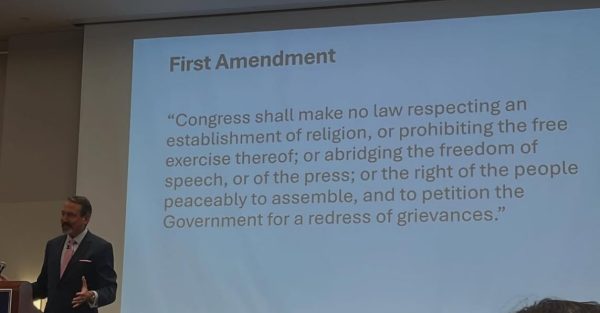
The First Amendment protects fundamental freedoms: religion, speech, press, assembly, and petition. It has provided a platform to expand public knowledge of information, stories, and news.
Ms. Jill Dion, a writing tutor at Foran, says, “The First Amendment assures that reporters can write about important happenings, even if the government doesn’t want them known, without fear of being punished for reporting the truth.”
Between Supreme Court cases, local alerts, and social controversy, journalism has held strong in its role, spreading awareness to make change. The freedom of the press protects journalists, allowing them to publish articles that may be controversial.
Mr. Christopher Kulenych, the journalism teacher at Jonathan Law High School, also teaches his students about the importance of the First Amendment in terms of student journalism.
Kulenych says, “The First Amendment protects freedom of the press and speech, allowing student journalists to report on important issues and express opinions without unfair censorship. It teaches students to think critically, hold institutions accountable, and be a part of important changes in their school or community.”
The Advocate, the Jonathan Law High School newspaper, and the Foran High School newspaper, Mane Street Mirror, both uphold these beliefs in their student journalism.
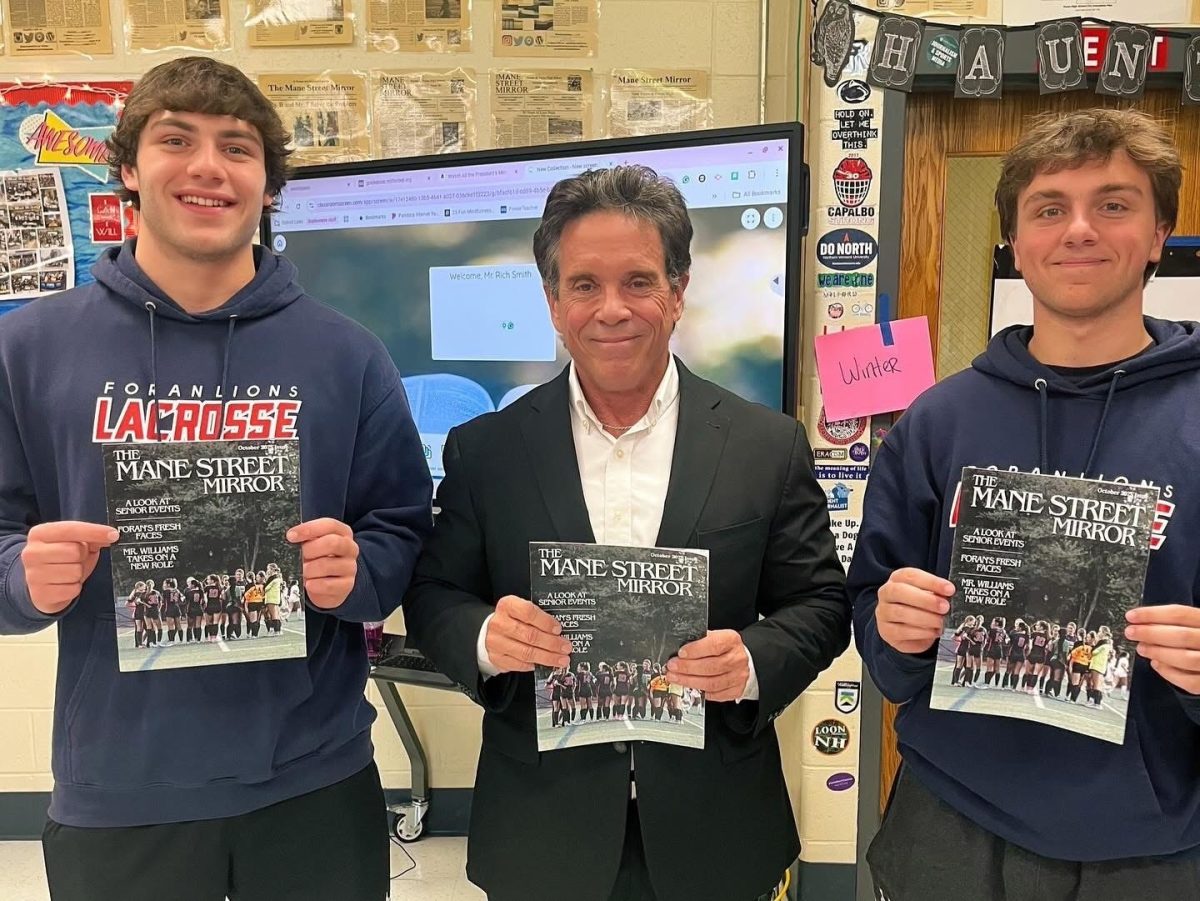
Mane Street Mirror publishes articles both online and in the monthly magazine. Students write based on current news, local businesses, how-tos, and behind-the-scenes of local events. The student-run paper provides a platform for students to share information with both students and staff in the community.
Co-Editor-in-Chief for the Mane Street Mirror, Gavin Conte, uses the First Amendment protection when reporting on school events.
“It helps us because it gives us the opportunity to report on whatever we feel is important, without any penalty or consequence. I think for the most part we have the freedom to report on what we want to report on, as long as it is neutral and based on facts, ” says Conte.