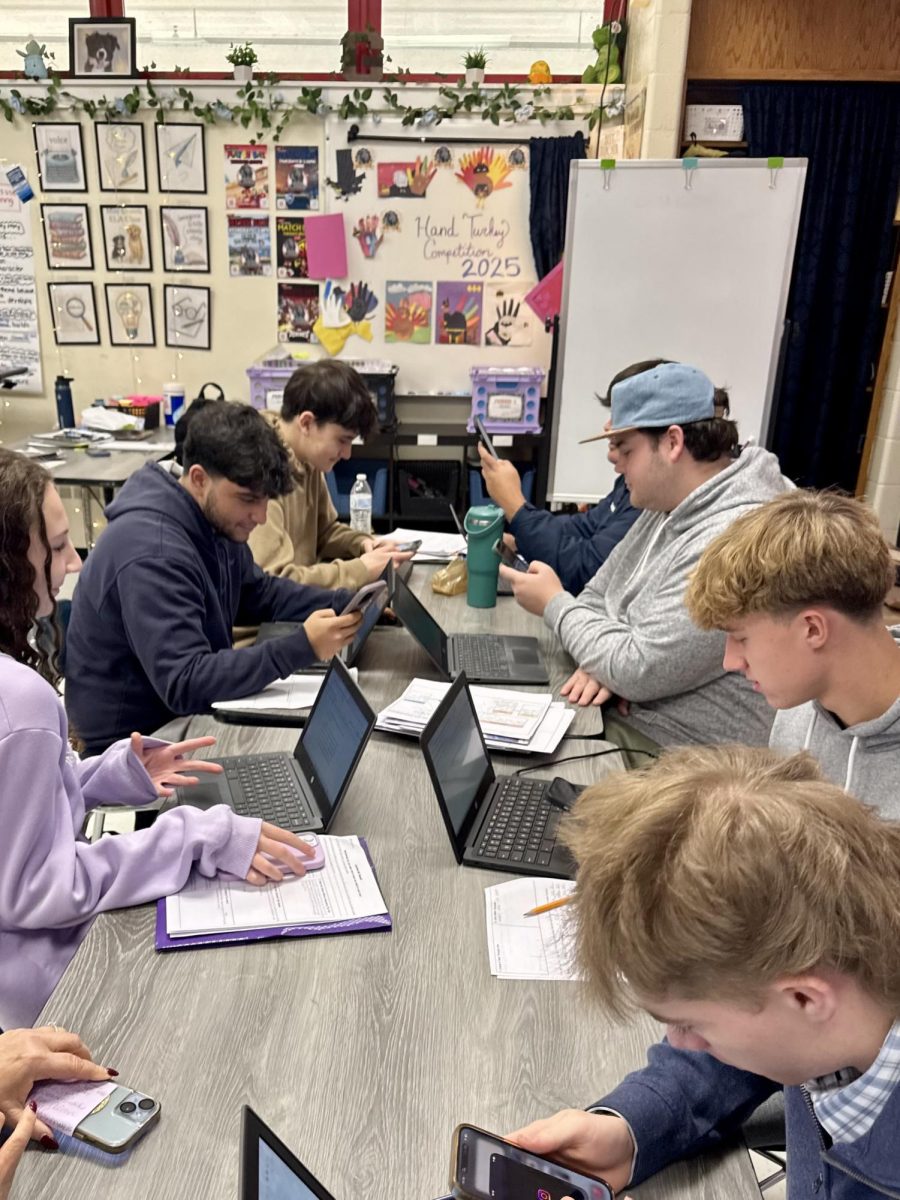
Nearly every student goes to class with the same object in their pocket: a cell phone. It connects people to friends and family, provides them with information galore, and gives everyone a connection to the far reaches of the outside world. However, phones also offer temptation, an escape from the bustle of the day with distractions.
As phones become more of an interference in classes, schools start to rethink their phone policies. The debate over phones has never been louder.
Last year, Connecticut passed a bill saying local and regional boards of education must adopt a policy each school year, starting with the 2025-26 school year, limiting smart device use in the schools they oversee.
Milford’s bill, passed by the Board of Education last November, is called “Use of Private Technology Devices by Students,” and includes cell phones, personal computers, smartphones, and smart glasses. These devices are not allowed in Milford’s elementary or middle schools, but they are allowed in the high schools, with certain guidelines.
The policy states, “devices must be turned off or on silent “in classrooms during the school day unless authorized by the classroom teacher for academic purposes.”
Miss Chelsea Green, an English teacher, states that phones in school “can allow for multimedia,” meaning students can listen to audio, watch videos, and interact with content that supports learning.
Some students say that listening to music can help them concentrate while working. Phones also allow students to listen to audiobooks of the book that they are reading in class to help them stay on task. Students also say they use their phones to take photographs and videos for class assignments when necessary.
Many students also point out that sometimes the school Chromebooks don’t have access to all websites; phones grant that access to students.
On the other side of the argument, science teacher Mr. John Connors is adamantly anti-phone. Connors was a member of the class of 1979 and graduated from Jonathan Law. He recalls that while he was in school, there were no phones; to contact someone if necessary, there were payphones.
Connors states, “There is a proper time and place for phones.”
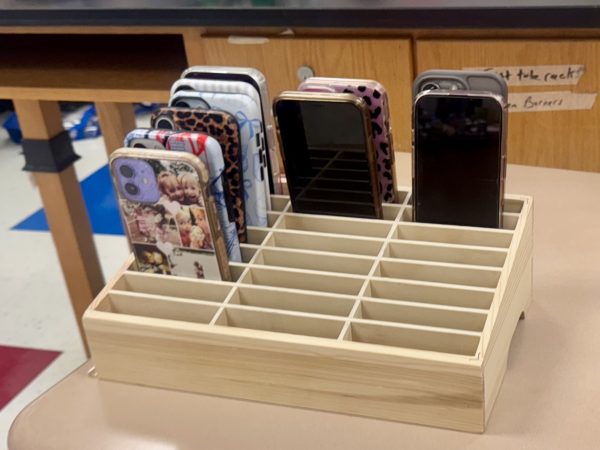
He has a phone box in his classroom and has established a routine for his students to place their phones in the bin upon arrival at class. He believes that if he begins helping to develop this habit early in the year, students will automatically place their phones in the phone bin upon entering the classroom.
Connors also states, “I think that parents need to educate [their kids] more about phone usage than the teachers [do].”
According to Central Rivers Sea, an education agency, 53 percent of school leaders believe cell phones hurt students in the school setting. Many believe students will use their phones to scroll through social media or text their friends during class rather than pay attention to the teacher. When students take out their phones while a teacher is speaking, it is often perceived as a lack of manners and respect, according to the agency.