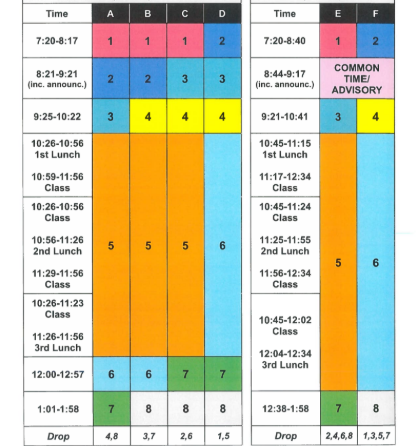
Instead of rushing from class to class every 58 minutes, many schools use a block day schedule with longer class periods that meet fewer times a week. This type of schedule can change how students learn and how teachers educate.
While block scheduling can allow for deeper lessons, less daily stress, and fewer classes, it can also create challenges with focus. Looking at both the pros and cons of a block day schedule helps students understand how school structure affects learning.
History teacher Mr. Brian Dooling states, “The flexibility of block days is nice, which opens up more opportunities for lessons.”
Longer class periods allow teachers to plan discussions, projects, and hands-on activities that would be more difficult to fit into a shorter class. This added flexibility helps students stay engaged and better understand the material.
According to the School Superintendents Association, it says, “The majority of teachers, administrators, students, and parents are favorable to block scheduling, even after the sometimes difficult period of change.”
Many teachers and students have complained that shorter class periods make it harder to work productively.
However, block day scheduling also comes with challenges. One major concern is how much instruction can be missed in a single absence.
Science teacher Mr. Matthew Wajda explains, “Students who miss school on a block day may struggle making up work.” This highlights one of the biggest downsides of block scheduling and shows how longer class periods can sometimes be ineffective for students rather than help them.
Wajda elaborates further, reasoning, “It would be very difficult to make up a lab.”
This highlights one of the biggest challenges of block scheduling and provides a deeper look at how longer class times can sometimes hurt students rather than help them. Looking at both the benefits and drawbacks of a block day schedule helps students better understand how school structure affects learning.