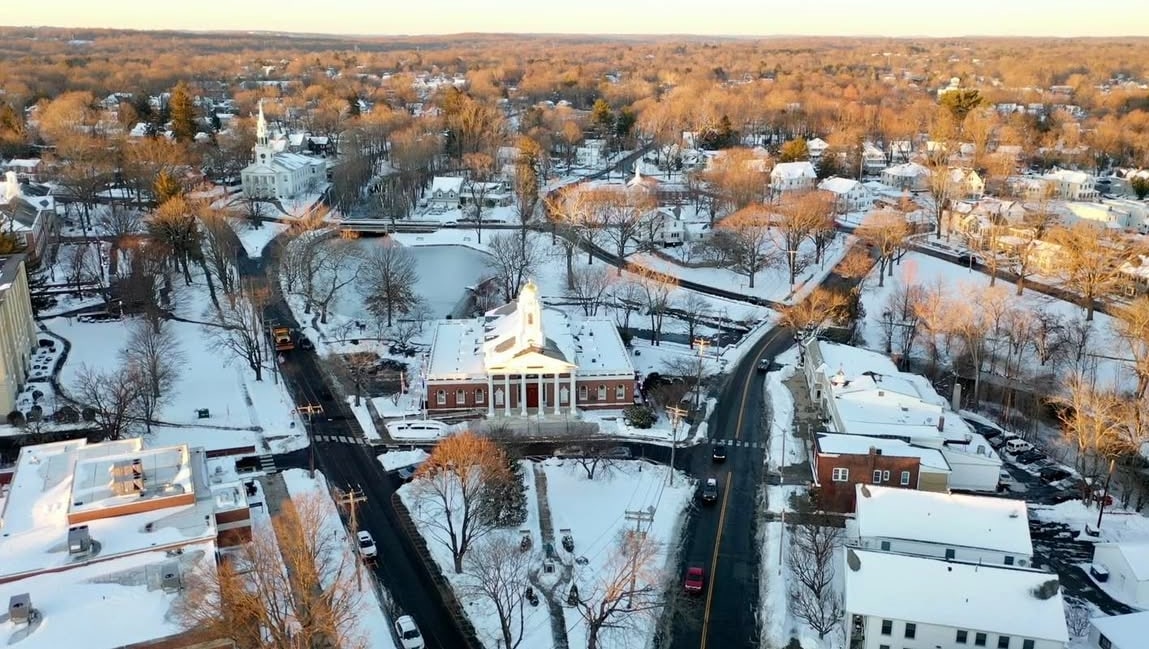
As the cold weather approaches and the first hints of frost appear in Milford, the town’s preparation for the winter season begins. From checking equipment to stocking up on road salt preparations begins long before people think.
Milford Public Works prioritizes winter preparedness, spending months ensuring roads are safe, services run smoothly, and residents can travel safely even in the toughest storms. Public Works Assistant Director Robert Harrigan explains, “We begin preparing for winter in early fall, focusing on preventive maintenance and a full review of all our trucks and equipment used for snow removal. This year, the garage started preparations in late September.” He adds, “As temperatures drop and winter approaches, we meet to finalize strategy, pairing drivers with routes, setting shift schedules, and planning overall storm response.”
To keep Milford moving safely during winter storms, the town follows a planned system for the plowing and salting of the roadways. Ensuring that essential routes remain open, the Public Works prioritizes roads based on traffic, safety, and emergency access. Harrigan explains, “Milford has over 205 miles of center-line roadways that Public Works is responsible for. Safety is always our top priority. Main arterial roads are the first priority. These are the main routes leading to hospitals, schools, firehouses, and police facilities, which are treated first. These roads carry the highest traffic volumes and keep emergency services moving safely, preventing gridlock as the storm progresses. All roads are plowed to be passable during the storm event. Once the snow ends, Public Works will begin plowing the remaining snow on the pavement to the road edge.”
As the town works to keep roads clear and safe, Milford Public Schools takes winter preparation seriously, especially when it comes to keeping students and staff safe.

Milford Public Schools Superintendent Dr. Anna Cutaia emphasizes the importance of their preparations. “Preparations for winter begin as early as June. We order materials and review our protocols with all maintenance and admin staff.”
When it comes to deciding whether to delay or cancel school, there’s a detailed process that starts days in advance. “We are watching the weather days ahead,” Cutaia explains, “There are very early conversations. If we know the night before, we are already talking and developing a plan. If it is a surprise storm, we get up at 3-4 am and start the work.”
Cutaia explained the decision-making process: “I talk with the Director of Facilities, who talks with the Department of Public Works. I also make contact with our meteorologist and the local towns. We consider the road conditions for student drivers, buses, and staff traveling to school, and this is the most difficult part. Sometimes we are put in a situation to predict weather conditions and at the same time ensure safety for all.”
Cutaia added that Milford’s geography makes decisions very difficult. “Sometimes, the north end of town is colder and therefore has different weather conditions compared to the shoreline. The decision is a district decision, so it may not always seem as bad by the shore when there is solid ice up at Mathewson.”
When winter weather is rolling in, Forans’ custodial staff is hard at work, double-checking their equipment and making sure they are stocked up on ice melt, sand, and gas. For Foran, safety during snowy and icy conditions is a top priority.
Head custodian Greg Kealey explains the process: “Parking lots are plowed, sidewalks and stairs are shoveled and snowblowed and treated with ice melt and sand.” Kealey states, “It’s a lot of hard work due to the size of the building and grounds that takes hours sometimes a day, depending on the storm. We are out in the cold, freezing rain, snow, and wind to get it done so school can open. We, as a custodial crew with the help of the maintenance department, make sure it’s safe for students and staff to return to the building.”